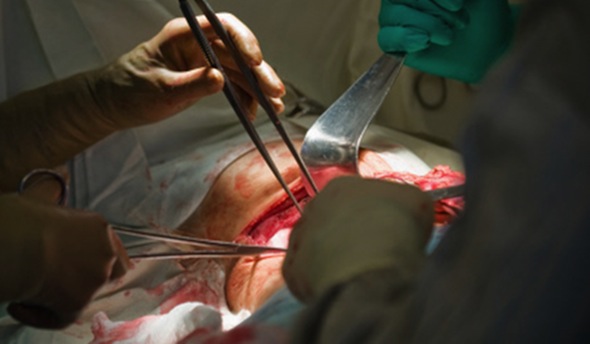
Organ Gangs Force Poor to Sell Kidneys for Desperate
Israelis
‘Exploit Shortages’
“There have been
successes fighting organ trafficking around the world,” Delmonico says.
“But
organ trafficking continues to flourish because criminals exploit shortages of
organ donors.”
Bloomberg Markets
reported in June that U.S. citizens and others from the Americas suffering from
kidney failure were going to Nicaragua and Peru to buy organs in a shadowy
trade that injured and killed donors and recipients.
That U.S.-Latin
American connection is dwarfed by a network of organ-trafficking organizations
whose reach extends from former Soviet Republics such as Azerbaijan, Belarus
and Moldova to Brazil, the
Philippines, South Africa
and beyond, a Bloomberg Markets investigation shows.
Many of the
black-market kidneys harvested by these gangs are destined for people who live
in Israel.
Not Enough Donors
With a generally
well-educated population of 7.4 million and a modern medical system, Israel has
an acute shortage of organs, in part because of religious beliefs. Just 12
percent of Israelis are registered donors, meaning they have consented to let
their organs be used for transplants after they die, according to the Israeli
National Transplant Center.
That compares with
40 percent of Americans. About 730 Israelis are currently waiting for a
transplant, which is 13 times more than the number of such surgeries performed
legally in Israel in 2010, according to the center.
Delmonico,
a professor of surgery at Harvard Medical School, has spent the past six years
lobbying governments and doctors around the world to combat organ trafficking.
...
The dearth of
available organs in Israel has spawned a new class of criminals, mainly
immigrants from the former Soviet
Union, says Jerusalem
Police Superintendent Gilad Bahat.
Investigators on
five continents say they have uncovered intertwining criminal rings run by
Israelis and eastern Europeans that move people across borders -- sometimes
against their will -- to sell a kidney.
“The criminal here
is the middleman who profits from the sick and the poor,” says Bahat, who
investigated an organ- trafficking ring in Jerusalem. “It touches my
heart that people will sell part of their body because they need money to
live.”
‘Obscene Profit’
Criminals see an
opportunity to make big money in the organ trade, where they can sell a kidney
for 15 to 20 times what they pay, police throughout Europe say.
“They recognize the
obscene profit that can be made in the expanding black market in body parts,”
says Jonathan Ratel, a Pristina,
Kosovo-based prosecutor who has been investigating organ trafficking over the
past two years. “It keeps happening because there is so much money in this.”
Traffickers
typically pay $10,000 to a seller for a kidney and collect $150,000 when
selling it to a patient.
Traffickers prey on
the most-vulnerable people. Moldova, the poorest
country in Europe, is one of their prime hunting grounds.
Dorin Razlog, a
shepherd with an eighth-grade education who lives in Ghincauti, says recruiters
for a trafficking ring told him cash for a kidney would lift him out of
poverty. After doctors in Istanbul cut out the organ in August 2002, they paid
him $7,000 -- $3,000 less than they’d offered. Of that, $2,500 was in
counterfeit bills, he says.
Prosecutors in nine
countries have been conducting criminal probes of organ trafficking involving
Israeli patients since 2003. The largest case dates to that year, when the
Brazilian Federal Police noticed people from two slums of Recife, a coastal
city 2,110 kilometers (1,311 miles) from Sao Paulo, flying to Durban, South
Africa.
They returned home
in so much pain from incisions across their abdomens that they needed
assistance to get off the plane, says Karla Gomes de Matos Maia, the
investigator who led the probe.
‘Suspect Organ
Trafficking’
“Here you had people
who didn’t fit the profile of tourists going to a strange destination and
coming back after having major surgery,” Maia says. “We began to suspect organ
trafficking.”
The Brazilian case
is still wending its way through international courts. In November 2010 in
Durban, Netcare Ltd. (NTC)
-- South Africa’s largest hospital company -- pleaded guilty to violating the
Human Tissue Act, which prohibits buying and selling organs.
Netcare paid 7.8
million rand ($848,464) in fines and penalties. It admitted to allowing 92
transplants in which donors from Brazil, Israel and Romania sold kidneys to
Israeli patients. Four doctors are awaiting trial on trafficking charges.
* * * * * * * *
Palestinians accuse the
Israeli army of selling the organs of its victims
Donald Boström
Israel has admitted
that in the 1990s, its forensic pathologists harvested organs from dead bodies,
including Palestinians, without permission of their families.
The issue emerged
with publication of an interview with the
then-head of Israel's Abu Kabir
forensic institute, Dr. Jehuda Hiss.
 |
| Doctor Jehuda Hiss |
The interview was conducted in 2000 by an
American academic, who released it because of a huge controversy last summer
over an allegation by a Swedish newspaper that Israel was killing Palestinians
in order to harvest their organs. Israel hotly denied the charge.
Parts of the
interview were broadcast on Israel's Channel 2 TV over the weekend. In it, Hiss
said,
"We started to harvest corneas ... Whatever was done was highly
informal.
No permission was asked from the family."
The Channel 2 report
said that in the 1990s, forensic specialists at Abu Kabir harvested skin,
corneas, heart valves and bones from the bodies of Israeli soldiers, Israeli
citizens, Palestinians and foreign workers, often without permission from
relatives.
In a response to the
TV report, the Israeli military confirmed that the practice took place.
August, 17, 2009
"I am what you can call a 'matchmaker'”, said
Levy Izhak Rosenbaum from Brooklyn, USA, in a secret recording by an FBI-agent
whom he believed to be a client. Ten days later, at the end of July this year,
Rosenbaum was arrested in connection with a massive corruption ring uncovered
in New Jersey: rabbis, congressmen and entrusted officials had for years been
busy with money laundering and the illegal organ trade, which now ended up like
a Sopranos episode. Rosenbaum’s matchmaking had nothing to do
with romance and everything to do with buying and selling, on the black
market, kidneys from Israel. According
to his own statements, he buys
organs from poor people in Israel for $10,000 and sells
them back to desperate patients in the US for $160,000. ...
 |
Levy Izhak Rosenbaum is driven away by FBI agents.
Rosenbaum was allegedly a middleman in the illegal
organ trade.
Photo: AP
|
The
accusations have shaken the American transplant industry. Should this be
true, it would be the
first time organ trafficking has been documented in the US, according to experts cited by the newspaper New Jersey Real-Time News.
On the
question of how many organs were sold, Rosenbaum says: "Quite a lot."
And he boasts, "I have never failed." His business was carried out
over a very long period of time.
Francis
Delmonici, a professor in transplant surgery at Harvard, and member of the
Board at the National Kidney Foundation’s Board of Directors, is quoted in the same newspaper, saying that the same type of organ
trafficking which takes place in Israel, also takes place in other parts of the
world. Delmonici says that of
the 63,000 kidney transplants
in the world, approximately 10% are illegal.
Hot
countries for that type of illegal trade are Pakistan, the Philippines and
China, where it is believed that organs are taken from executed prisoners. But
strong suspicion also exists in Palestine, where people believe that their
young men, captured as prisoners, have, as in China and Pakistan, been taken as organ donors and that they
were later executed. This is a very
serious allegation that raises
so many questions, that the ICJ, International Court of Justice, should
absolutely open an investigation over the possibility of war crimes perpetrated
by Israel.
Israel
has time and again been at the forefront of criticism when it comes to its
unethical way of handling organs and transplants. Countries like France have
suspended their cooperation on organs
with Israel since the beginning of the 90s, and the Jerusalem Post
wrote:
”Other countries in
Europe are expected to follow France’s example shortly”.
Half
of the new kidneys that Israelis have received since the beginning of the year
2000 have been illegally bought from Turkey, Eastern Europe or South America.
The Israeli health-care authorities have a complete knowledge of the activity,
but do nothing to stop it. In 2003, at a conference, it was revealed that
Israel is the only western country where doctors do not condemn the illegal
trade of organs or take any legal measures against doctors who have conducted such illegal operations. To the contrary, according to Dagens Nyheter
(December 5, 2003), the Chief
Doctors of the largest hospitals are involved in the majority of illegal
transplant cases, .
 |
| Ehud Olmert |
In an
attempt to fill the need for organs in the country, Israel’s then health
minister, Ehud Olmert, ordered a large
campaign in the summer of 1992, to get the Israeli population to come forward
as organ donors. One half million pamphlets were distributed to local
newspapers where citizens were encouraged to write to donate their organs after
their death. Ehud Olmert was the first to write his name down.
Only a
couple of weeks later, the Jerusalem Post
wrote that the campaign had been very successful. Not less than 35 000 persons
had enrolled, when usually it’s about 500 a month. In the same article, the
journalist Judy Siegel, wrote that the
gap between offer and demand was still extensive. 500 persons were queuing for
a kidney transplant, but only 124 could receive surgery.
Out of 45 persons in
need of a new liver, only three had a chance to get an operation in Israel.
At the
same time when that campaign was going on,
young Palestinians were disappearing
and were being returned at night to their villages,
five days later, dead and
ripped up.
The story
of the ripped up bodies terrified the populations in Gaza and the West Bank.
There was a story of a dramatic increase of young men’s disappearance, with the
subsequent nightly funerals of autopsied young men.
 |
| Donald Boström |
I
was in the area working on a
book when I was contacted several times by UN staff members who were worried about the situation. Those who contacted me said that the theft of organs
indeed took place, but that there was nothing they could do. On assignment for
a TV company, I traveled around and spoke with a great number of Palestinian
families in the West Bank and Gaza, who declared that their sons had been
robbed of their organs before they were killed. One of the examples I came
across on that gruesome journey was the young stone thrower Bilal Achmed
Ghanan.
It
was close to midnight when the sound of the engines of cars coming from the Israeli military column was heard in the
outskirts of the small village called Imatin on the northern part of the West
Bank. The two thousand villagers were awake and stood silently, shadowed in the
dark. Some were posted on the roofs, others behind their curtains, houses or
trees that could give them protection in the darkness under the curfew but
could give them a good view
over what would become the cemetery for the village’s first martyr. The
military had cut off all electrical power around the village and the area was
restricted to the military — not a single cat could move outside without
risking its life. The darkness’ numbing silence was only broken by quiet
sobbing, and I don’t remember if we were shivering because of the cold or
because of the suspense. Five days earlier, on May 13th, 1992, an Israeli
special force unit had waited in an ambush at the village’s carpentry shop. The person the special forces were looking for was the young 19-year old Bilal Achmed Ghanan, whom they had
orders to neutralize, as he was
one those active young Palestinians who rendered the Israeli occupation forces’
lives miserable by throwing stones.
Bilal
Ghanan was one of the leading stone throwers and had been on the wanted list
for a couple of years. This meant that he and other wanted stone throwing boys
lived under the bare sky up in the Nablus Mountains. To be captured implied
death and all the stories about previous torture scenes did not improve things.
So they remained in the mountains. But for one reason or another, Bilal came
down from the mountains one day
and wandered unprotected into the village, passing the carpenter’s house on that unlucky day in mid-May. Why he did
come down on that particular day, not even Talal, his older brother,
could say. Perhaps there was a
lack of food and they were short of supplies.

Everything
happened according to plans for the Israeli Special Forces unit. They stubbed
out their cigarettes, took away the cans of Coca Cola and took aim calmly and
quietly through the broken window. When Bilal was near enough, they only had to
squeeze the trigger. He got shot the first time in the chest. According to the
villagers who witnessed the incident, he was also shot after that, once in each
leg. After which, two soldiers ran out from the carpentry shop and shot him
twice in the stomach. Finally, they took Bilal by the feet and dragged him down
the 20 steps of stone of the carpentry. The villagers also say that afterwards,
people from the UN and the Red Crescent who happened to be in the area and had
heard the shots came to take care of the wounded.
The
discussion over who would take care of the victim ended when the Israeli forces
took charge of the badly hurt Bilal, loaded him into a jeep and drove away to
the village’s outskirts. There waited a military helicopter that took Bilal
away to an unknown destination.
Five
days later, he was back in the darkness, dead and wrapped up in green hospital
cloths. When the military column, that had come to get Bilal from the autopsy
center Abu Kabir outside Tel Aviv, stopped by the place where Bilal would be placed to rest, someone recognized the Israeli military leader by the name of
Captain Yahya. In the dark, a person whispered “The worst of them all” in my ear. After Captain Yahya’s men had
unloaded the body and exchanged the green cloth for a light colored cotton
cloth, a few male relatives were picked up to complete the job by digging earth and mixing cement.
Together
with the sharp sound of the spades, some laughs were heard on the part of the
soldiers who waited to go home as they exchanged jokes with each other. When
Bilal was lowered down to the ground, his chest was exposed and it became
suddenly clear to those who were present what type of abuse he had been
subjected to. Bilal was by no means the first person who was buried with a
stitched up body from the stomach to the neck, but speculation about the
purpose jumpstarted.
 |
Bilal Achmed Ghanan, 19 years old, was shot
and taken by Israeli soldiers.
His body was later returned stitched up again
from belly to neck. Photo: Donald
Boström
|
The
victimized Palestinian families on the West Bank and Gaza were convinced of
what had happened to their sons. "Our sons are used as unwilling organ donors," said the relatives of Khaled from Nablus to me. The same went with Raed from Jenin and the
cousins to Machmod and Nafes from Gaza, who all disappeared over a number of
days and had returned at night, dead and autopsied.
Bilal
Achmed Ghanem was one of the 133 Palestinians who were killed in various ways that year. According to Palestinian
statistics, the reasons of death were as follows: shot in the street, explosion, battery, tear gas, intentionally run over by a car,
hanged in prison, shot at school, killed in the house, etc. Of those 133
assassinated persons of all ages from four months to 88 years old, 69 were
autopsied, which is to say half of the dead. The routine autopsies carried out on dead Palestinians, as the army spokesman said, do not match the reality in the occupied areas. The
questions remain.
We know
that there is a great need for organs in Israel. And we know that there is a
widespread illegal organ trade under way, that it has been going on for a long
time, that it takes place with the blessing of the authorities, and that
high-level doctors in the largest hospitals and officials at different levels
also take part in it. And we know that Palestinian young men disappeared, that
they were returned five days later under mysterious circumstances at night,
ripped up and stitched back.
* * * * * * * *
Israeli Organ Harvesting
by ALISON WEIR
In the article, “Our
sons plundered for their organs,” veteran journalist Donald Bostrom writes that
Palestinians “harbor strong suspicions against Israel for seizing young men and
having them serve as the country’s organ reserve – a very serious accusation,
with enough question marks to motivate the International Court of Justice (ICJ)
to start an investigation about possible war crimes.”
An army of Israeli
officials and apologists immediately went into high gear, calling both Bostrom
and the newspaper’s editors “anti-Semitic.” The Israeli foreign minister was
reportedly “aghast” and termed it “a demonizing piece of blood libel.” An Israeli
official called it “hate porn.”
The fact is,
however, that substantiated evidence of public and private organ trafficking
and theft, and allegations of worse, have been widely reported for many years.
Given such context, the Swedish charges become far more plausible than might
otherwise be the case and suggest that an investigation could well turn up
significant information.
Below are a few
examples of previous reports on this topic.
Israel’s first heart
transplant
Israel’s very first,
historic heart transplant used a heart removed from a living patient without
consent or consulting his family.
In December 1968 a
man named Avraham Sadegat (the New York Times seems to give his name as A
Savgat) (2) died two days after a stroke, even though his family had been told
he was “doing well.”
After initially
refusing to release his body, the Israeli hospital where he was being treated
finally turned the man’s body over to his family. They discovered that his
upper body was wrapped in bandages; an odd situation, they felt, for someone
who had suffered a stroke.
When they removed
the bandages, they discovered that the chest cavity was stuffed with bandages,
and the heart was missing.
During this time,
the headline-making Israeli heart transplant had occurred. After their initial
shock, the man’s wife and brother began to put the two events together and
demanded answers.
The hospital at
first denied that Sadegat’s heart had been used in the headline-making
transplant, but the family raised a media storm and eventually applied to three
cabinet ministers. Finally, weeks later and after the family had signed a
document promising not to sue, the hospital admitted that Sadagat’s heart had
been used.
The hospital
explained that it had abided by Israeli law, which allowed organs to be
harvested without the family’s consent. (3) (The United Nations
Convention against Transnational Organized Crime includes the extraction of
organs in its definition of human exploitation.)
Indications that the
removal of Sadagat’s heart was the actual cause of death went unaddressed.
Mysterious Scottish
death
In 1998 a Scot named
Alisdair Sinclair died under questionable circumstances while in Israeli
custody at Ben Gurion airport.
His family was
informed of the death and, according to a report in J Weekly, “…told they had
three weeks to come up with about $4,900 to fly Sinclair’s corpse home.
[Alisdair’s brother] says the Israelis seemed to be pushing a different option:
burying Sinclair in a Christian cemetery in Israel, at a cost of about $1,300.”
The family scraped
up the money, brought the body home, and had an autopsy performed at the
University of Glasgow.
It turned out that Alisdair’s heart and a tiny throat
bone were missing.
At this point the British Embassy filed a complaint with
Israel.
The J report states:
“A heart said
to be Sinclair’s was subsequently repatriated to Britain, free of charge. James
wanted the [Israeli] Forensic Institute to pay for a DNA test to confirm that
this heart was indeed their brother’s, but the Institute’s director, Professor
Jehuda Hiss refused, citing the prohibitive cost, estimated by some sources at
$1,500.”
 |
| Doctor Jehuda Hiss |
Despite repeated
requests from the British Embassy for the Israeli pathologist’s and police
reports, Israeli officials refused to release either.

* * * * * *
China’s illegal organ harvesting
Transplant consent in theory only
Rep. Christopher H. Smith
In the mid-1990s, I
began holding hearings on the practice of organ harvesting of prisoners in China, and
unfortunately, the controversial practice has not gone away. At a hearing for
which I was co-chairman last week, two subcommittees of the House
Foreign Affairs Committee heard that even though few Chinese voluntarily
donate organs, China
stands next behind the United States in the yearly number of organ transplants.
With 600 transplant centers, it has become a destination for “transplant
tourism.” Each transplant of a heart or liver can provide more than $100,000 in
revenue.
What adjectives can
we use to describe the prospect that Chinese doctors and hospitals are engaged
in large-scale harvesting of human organs for profit? The ordinary words such
as “disturbing,” “appalling” or even “shocking” are inadequate.
So far, I have
referred to ordinary transplants. But there’s a graver prospect. It is that
Chinese military doctors may be engaged in organ harvesting from prisoners and
labor-camp detainees, especially prisoners of conscience.
China’s vice minister
of health acknowledged in 2005 that almost all organs come from executed
prisoners, but the number of executions in China is a “state
secret.” In China,
there are no firm statistics, no open waiting lists and no transparency in the
granting of “consent.” From the few times Chinese doctors or health officials
have discussed China’s
transplant system at international meetings, the figures don’t add up. The best
available outside estimates indicate that the number of transplants apparently
exceeds the number of criminal executions. So then, what is the source of the
additional organs?
….
The most gruesome
testimony came from Chinese doctors who told Mr. Gutmann
that some of the organs for transplant came from still-living victims.
Yes, these reports
of horror sanctioned by a modern state beg for evidence, and proof is in short
supply. But this possibility pushes us into a horrific beyond, a beyond that
challenges our language, making “barbaric” too calm a word, too leached of horror.
http://www.theoccidentalobserver.net/authors/SwedishTrans.html
http://www.counterpunch.org/2009/08/28/israeli-organ-harvesting/
http://www.bloomberg.com/news/2011-11-01/organ-gangs-force-poor-to-sell-kidneys-for-desperate-israelis.html
http://www.washingtontimes.com/news/2012/sep/18/chinas-illegal-organ-harvesting/#ixzz2wNRsNUfR