COLLECTIVE MADNESS


“Soft despotism is a term coined by Alexis de Tocqueville describing the state into which a country overrun by "a network of small complicated rules" might degrade. Soft despotism is different from despotism (also called 'hard despotism') in the sense that it is not obvious to the people."

Friday, December 22, 2006

Pat Buchanan on Scarborough Country Last Night

Pat, things seem to be heating up. And the president of Iran, as crazy as he is, seems to enjoy provoking America, provoking Israel, provoking its allies, saying he‘s going to wipe us off the map.

Does that not give President Bush the cover he needs to say, this man can‘t be trusted with a nuclear weapon; we need to act sooner rather than later against Iran?

PAT BUCHANAN, MSNBC POLITICAL ANALYST: Well, first off, he‘s prophesizing we‘re going to disappear from the earth. Secondly, he doesn‘t have control over the military authority in Iran. That is the ayatollah that does.

But there, Joe, what exactly what he is doing, he‘s appealing to the Arab and Islamic street. He‘s uniting Sunni and Shia by mocking and belittling and provoking the United States verbally.

I wouldn‘t worry about that much. He‘s been doing it for a year. Iran is yet to take a single military action that they know would result in massive American or Israeli retaliation.

I do think, on our side, the president is probably considering - has to be, he and Cheney - whether or not they want to leave office with Iran still moving toward enrichment of uranium, toward the possibility of a nuclear weapon.

So, I think if there‘s .

SCARBOROUGH: Don‘t you think, Pat, that this president and the vice president are right now considering the possibility of military strikes on Tehran - not an invasion, but military strikes?

BUCHANAN: Well, I don‘t know about Tehran, but I would think the Bushehr plant, the Natanz plant and the other nuclear facilities, they‘ve probably got - we probably have active plans for taking those out. My guess is the Israelis do.

But I don‘t think the president‘s going to pull the trigger yet, Joe. He‘s still moving down the diplomatic track. They might get some sanctions on Tehran. I think there‘s the makings of a deal.

One Iranian spokesman said today, we will accept inspections, and we will agree to peaceful nuclear power and accept inspections. That‘s a solution. If we could get a solution like that, I think we should go for it.

SCARBOROUGH: Michael Crowley, though, isn‘t it possible - I really believe that this president may consider attacking - along with Israel - attacking some nuclear site in Iran, simply because, you know, the way they work. They don‘t trust the Iranians. They‘re not going to sit down with the Iranians and negotiate with the Iranians like the Baker commission suggested.

So, in the end, don‘t you think we may see some military strikes along with Israel against some of these nuclear positions there, especially if their president continues to threaten wiping out the United States and Israel?

CROWLEY: Yes, well, you know, Ahmadinejad does not - I mean, I can see the strategic reason for how those words play in the Middle East. But as far as trying to get the United Nations and our European allies off his back, he does not do himself any favors with that rhetoric and this crazy Holocaust conference he had.

I wouldn‘t be shocked if there were military strikes. I do think that it sounds like Cheney, and maybe Bush also, think that it‘s a very plausible option. But it‘s a very frightening one.

I mean, first of all, it‘s not clear to me that .

SCARBOROUGH: Well, talk a little bit more about Iran‘s president. This is a guy that was involved with the students back in 1979. He‘s been at the epicenter of this Islamic revolution all these years.

I mean, people, especially in Israel, but conservatives in America, are scared to death by this man, aren‘t they?

CROWLEY: Yes. I mean, he definitely seems crazy. He says - he may be crazy like a fox, but he says crazy-sounding things. I mean, the Holocaust conference was appalling. He talks about the destruction of America. And there is a persuasive argument that says, sometimes you have to take people at their word.

You can‘t always - I mean, it‘s a tired - Hitler analogies tend to be kind of tired, but there is truth to the fact that some people thought that Hitler said a lot of crazy things, but he didn‘t actually intend to act on them. Sometimes people mean what they say, and you can‘t always just write it off.

I just feel like it‘s not even clear whether bombing these nuclear sites would be effective. You could have the worst of both worlds by striking at the nuclear plants .

BUCHANAN: Exactly.

CROWLEY: . and not knocking them out.

BUCHANAN: Joe, .

CROWLEY: And we know how taxed our military is right now. We can‘t afford to be starting a second war, particularly with our troops so vulnerable there in Iraq. Iran could make life miserable for the U.S. military in Iraq.

BUCHANAN: Joe, here‘s the thing, though. Ahmadinejad is not a - he‘s not crazy; he‘s a fanatic. He‘s a dedicated, serious fanatic.

But here‘s the thing. The president of the United States does not have the authority to attack Iran. That is an act of war against a country we have not declared war against.

SCARBOROUGH: Well, didn‘t Ronald Reagan .

BUCHANAN: The Congress of the .

SCARBOROUGH: Didn‘t Ronald Reagan attack Libya?

BUCHANAN: He attacked Libya in response to an attack. If Iran attacks us, George Bush has authority to smash them. And he would.

But what I believe Congress ought to do is pass a resolution, if it‘s got any guts, saying the president of the United States does not have the authority to attack Iran unless and until it comes to us and gets our approval of acts of war against Iran. If the Congress had any guts, they would do that on January 5th.

SCARBOROUGH: I don‘t think they‘re going to do it. And I think this conflict is going to continue to rise. And I wouldn‘t be surprised if we didn‘t strike out against Iran in the next six months to a year, because I believe - look, Pat, and you alluded to it - I believe this president will not leave office with the Iranians holding a nuclear weapon.

BUCHANAN: But, Joe, isn‘t that .

SCARBOROUGH: I just - I don‘t think it‘s going to happen.

BUCHANAN: Isn‘t that a impeachable act to take us to war in the absence of a declaration of war and in the absence of any attack? Where does he get that authority? He‘s not a king.

SCARBOROUGH: Well, a lot of people would say right now that the president‘s acting like a king in Iraq. When you‘ve got only 12 percent of Americans wanting more troops.

BUCHANAN: Right.

SCARBOROUGH: When you have him going against all of his generals.

We‘re in a very frightening time.

BUCHANAN: But, you know, Joe .

SCARBOROUGH: Pat.

BUCHANAN: Joe, the Congress could cut off the funds for the new troops, if they had any courage. They don‘t. That‘s the problem.

SCARBOROUGH: Well, we‘re going to see what happens. We‘re going to see if the Democrats deserve the majority, or whether they‘re going to be booted out two years from now.

Pat Buchanan, thanks for being with us. Michael Crowley, I greatly appreciate it.

And as Pat said, it‘s all in the hands of the Democrats right now. They‘re in charge. They asked to be in charge. Now, let‘s see what they‘re going to do with the power that the American people entrusted them with.

Republicans have certainly blown it over the past six years. Let‘s see how Democrats handle it for the next two.

"Chaos and bloodshed must precede the return of the 12th Imam,"

November 6
Ayatollah’s health fails as Iran power struggle grows

by Michael Ledeen

Three days ago, Iran’s dictator, Supreme Leader Ayatollah ali Khamenei, was rushed to the vast medical facility traditionally known as “Vanak” hospital (it now has an Arabic name that means “the 12th Imam Hospital”), a 1,200-room facility that saves half of its beds for the leadership.

Khamenei is known to be suffering from cancer, and taking considerable quantities of an opium-based pain killer. He has lost more than 17 pounds in the past ten months, and was told last spring that he was unlikely to see another New Year (In the Iranian calendar, the New Year begins at the end of March).
About the man tapped to replace him.

The War Ayatollah By Patrick Poole FrontPageMagazine.com | December 11, 2006

Timothy Furnish, professor of Middle East History at Georgia Perimeter College, author of Holiest Wars: Islamic Mahdis, their Jihads and Osama bin Laden and editor of Mahdiwatch.org, told me yesterday that the consequences of such a scenario could be even more drastic, saying that Mesbah-Yazdi’s selection as Supreme Leader and the policy shift that would follow would be an inevitable prelude to war with Iran:

I think that his taking the helm there would virtually ensure eventual war with Israel and/or the U.S., for two reasons: Mesbah-Yazdi's geopolitical views – which include approval of first-use of nuclear weapons – make him perhaps the ultimate Shi`ite jihadist; and his eschatological fervor, which brings to mind previous historical examples of bloody Mahdist movements, such as Ibn Tumart of 12th century Morocco and Muhammad Ahmad of 19th century Sudan.

As I noted in an article published in August by FrontPage, Ahmadinejad’s Apocalyptic Faith, the extremist worldview promoted by Mesbah-Yazdi centers on the belief of the imminent return of the Shia’s 12th Imam, the cardinal element to the Hojjatieh faith. It is the implications I describe in that article of what they believe about the return of the 12th Imam, however, that should give Western leaders concern:

But rooted in the Shi’ite ideology of martyrdom and violence, the Hojjatieh sect adds messianic and apocalyptic elements to an already volatile theology. They believe that chaos and bloodshed must precede the return of the 12th Imam, called the Mahdi. But unlike the biblical apocalypse, where the return of Jesus is preceded by waves of divinely decreed natural disasters, the summoning of the Mahdi through chaos and violence is wholly in the realm of human action. The Hojjatieh faith puts inordinate stress on the human ability to direct divinely appointed events. By creating the apocalyptic chaos, the Hojjatiehs believe it is entirely in the power of believers to affect the Mahdi’s reappearance, the institution of Islamic government worldwide, and the destruction of all competing faiths.

Remember that name, "Mesbah-Yazdi"
(-: The Elephant Bar - Keeping You Informed! :-)

Talk about Iran being helpful in Iraq? Not so, says The Telegraph.


War on two fronts in Afghanistan

By Con Coughlin, The Telegraph
Last Updated: 12:01am GMT 22/12/2006


Just when it seemed matters could not get any worse in Afghanistan, along comes an altogether more alarming threat to Nato's attempts to restore order to that strife-torn region — in the form of Iran's Revolutionary Guards.

Ever since the US-led coalition overthrew the Taliban and their al-Qa'eda allies in late 2001, it has been assumed that the biggest threat to the successful restoration of Afghanistan as a functioning state was posed by the surviving remnants of the former regime and their sponsors in Pakistan.

Indeed, the main thrust of last summer's Nato offensive was concentrated along the Pakistani border, where a hard core of about 1,000 Taliban fighters have been attempting to re-establish a power base that could be used for an attempt to seize Kabul.


The British Army — which is in the vanguard of Nato's efforts to control the south — fought the fiercest engagements it has encountered since the Second World War in its campaign to subjugate the Taliban, and has been, in the main, successful in defeating a determined enemy.

The entire Nato effort in Afghanistan, moreover, has been predicated on the assumption that the key to success lies in suppressing the Taliban resurgence in the south, and persuading the Pakistanis to take effective action to dismantle the Taliban's training infrastructure in its lawless North-West Frontier provinces.

At no point have Nato's planners paid any serious attention to the other country whose border stretches for hundreds of miles along Afghanistan's western border, even though Iran's visceral hostility to the presence of a massive Western force so close to home is hardly a secret. This is despite the fact that the Iranians have actively supported, equipped and trained the insurgent groups that have caused coalition forces so much discomfort in southern Iraq.

But whenever I have raised the issue of Iranian involvement in Afghanistan on my visits to Nato headquarters over the past year, I have invariably been greeted with either blank stares or an eagerness on the part of senior commanders to move quickly to another, more amenable topic of conversation.

That state of affairs is unlikely to persist following the appearance in court earlier this week of a top British military aide on spying charges. Cpl Daniel James, who acted as the official translator for Lt-Gen David Richards, the British commander of Nato forces in Afghanistan, has been charged with "prejudicing the safety of the state" by passing information "calculated to be directly or indirectly useful to the enemy" to a foreign power, whose identity sources have suggested is Iran.

Irrespective of the outcome of the James case, the mere suggestion that Iran should be seeking to recruit someone with access to the innermost counsels of Nato's high command is indicative both of Teheran's intense interest in Nato's activities in Afghanistan, and its determination to ensure that the West is not allowed to succeed in transforming the country from Islamic dictatorship into stable democracy.

It also makes a mockery of the recent suggestion, advanced in both Washington and London, that the only way to resolve the region's difficulties is by engaging in a constructive dialogue with Teheran. Whether it be in Iraq or Afghanistan, the over-riding priority of the regime of Iranian President Mahmoud Ahmedinejad is to ensure the coalition's efforts at nation-building end in failure.

As in Iraq, the history of Iran's involvement in Afghanistan has been complex, but rarely benign. During the Soviet occupation of the 1980s, the Iranians supported one of the fiercest Mujahideen groups. More recently, the Iranians helped hundreds of al-Qa'eda fighters to escape from Afghanistan following the coalition's military campaign to remove the Taliban from power in 2001. Recent intelligence reports have indicated that many senior al-Qa'eda leaders — including two of Osama bin Laden's sons — are still living in Teheran under the protection of the Revolutionary Guards, where they are being groomed for a possible takeover of the al-Qa'eda leadership.

Nor is Iran's involvement in the region confined to Afghanistan. The Iranians also have close links with Pakistan, where they have been identified as one of the countries that bought blueprints for making nuclear weapons from A. Q. Khan, the so-called "father" of Pakistan's nuclear bomb.

Given the extent of Iran's interests in the region, it might appear strange that Nato commanders have appeared reluctant even to discuss the possibility that the Iranians might have their own agenda in upsetting coalition attempts to establish an effective government, particularly when commanders in Iraq have been frank in blaming the Iranians for helping to orchestrate the roadside bombs that have killed and maimed so many soldiers.

The reason for this apparent reticence on the part of Nato commanders is that, given the limited resources at their disposal, they have a big enough challenge dealing with the threat posed by the Taliban in southern Afghanistan, without running the risk of extending their field of operations elsewhere. But all that might soon change if, as some intelligence reports suggest, concrete evidence emerges that Iran is actively supporting and providing equipment to Taliban-related groups fighting Nato forces in Afghanistan.

"The Iranians are playing a very clever game in Afghanistan," a Western intelligence official based in Kabul recently told me. "On the surface, they give the impression they have no interest in what is going on, but behind the scenes they are working hard to influence groups such as the Taliban who are causing Nato the most problems."

Which would explain why the heavily fortified Iranian embassy in central Kabul, which is located less than a mile from the British mission, is second in size only to that of the sprawling American embassy.

If, as now seems likely, the Iranians are to become serious players in the new Great Game taking place in Afghanistan, then it is essential that Nato be given sufficient numbers of combat troops to ensure that the hazardous mission it has been asked to undertake ultimately ends in victory.


Comment on this story at The Telegraph

How important is Iran to the future of Iraq? A lot, say the Russians.

Only Iran can help Bush in the Middle East

By Pyotr Goncharov Kuwait Times


The Bush administration now faces a difficult and extremely unpleasant decision: Should it, and can it, involve Iran in the effort to stabilise the Middle East, notably Iraq? This time the issue has been raised by the Americans. According to the much publicised report by former US Secretary of State James Baker and former Congressman Lee Hamilton, delivered to George W Bush, the situation in Iraq may drift into chaos, which will not just result in the toppling of the government and a humanitarian catastrophe: there is a great danger that the bloodshed will spread to other Middle Eastern countries, spawning a regional conflict.

The Baker-Hamilton report's verdict is very pessimistic: the US's international image will be damaged for the foreseeable future, while domestic opinion will polarise even more. What is to be done? The report proposes involving Iran in stopping the violence in Iraq. The advice makes sense, but given the mutual dislike of Tehran and Washington it is not likely to be followed. American-Iranian cooperation in Iraq would require direct bilateral talks, which has so far been unthinkable for the Bush administration for several reasons.

The first is the notorious Iranian nuclear dossier. A White House spokesman has already said that they have ruled out bilateral talks with Iran until it stops uranium enrichment and processing.

Another reason is even more sensitive for Washington: it is unclear how Iran, which has recently been positioning itself as a new Middle East superpower, will behave. There is no doubt that it will demand a lot, if, of course, it vouchsafes its participation in talks at all. Besides, Iran is the last country to want the United States to leave Iraq now. Tehran is perfectly aware of the responsibility it would have to shoulder if it did. But does Iran have the strength, money and capability to prevent the situation in its neighbour from escalating into a war, given the developments in Lebanon and the Palestinian-Israeli conflict?

It does not, of course. Moreover, Iran's aspirations to develop its nuclear program and assume a leading position in the region have been met with hostility in the Arabian Gulf states. Evidence of that is their rejection of Tehran's initiative on signing a non-aggression and non-interference pact that would remove tensions around the Iranian nuclear file. So if the US leaves, Iran may be left to face not only all potential problems in the region alone, but an anti-Iranian coalition as well. Nevertheless, Tehran will continue "boycotting" America's presence in the region, without crossing over the line it has drawn. This stance has obvious advantages in indirect bargaining with Washington, both on the nuclear program and on protection of regional priorities.

In addition, there is the current Iraqi government, which for obvious reasons does not want to speak too loudly in favour of a US withdrawal, a fact that creates additional difficulties for Iran. This could be seen at the recent Iran-Iraq summit. Tehran positioned Iraqi President Jalal Talabani's visit to Iran as an emerging strategic alliance in the Middle East. The joint statement signed by Talabani and Iranian leader Mahmoud Ahmadinejad touches upon many important issues, such as a bilateral agreement and relations between the two countries in general, but it does not say anything about the coalition forces deployed in Iraq.

The White House does not rule out that President Bush may announce changes in the strategy in Iraq before the year is out. This will be done after he compares the conclusions of the Baker-Hamilton Iraq Study Group with the recommendations of two other similar reports on Iraq. One of them is being drafted by the National Security Council, and the other by the Joint Chiefs of Staff of the US Armed Forces. Meanwhile, the Bush administration should probably acknowledge that the US does not have a clear stand on any Middle East developments, whether it is the situation in Lebanon or Israeli-Palestinian relations. Its position on Iraq also needs a major adjustment. The key to many problems might be found in Iran, but this will not be an easy task.

NOTE: Pyotr Goncharov is a political commentator for the Russian News and Information Agency Novosti - MCT

Thursday, December 21, 2006

Break out the Anti-Depressants

Pat Buchanan's latest column Broken Army, Broken Empire left me in a bad mood. I chafed when I read his bitter, critical words but just because one doesn’t like the message doesn’t mean it has no value. He leads his column with this perspective:
The insurgencies in Iraq and Afghanistan have thus far cost fewer U.S. lives than the Filipino insurgency of 1899-1902.

Buchanan’s message is that the Generals have warned that the army is too small and will break without more soldiers. It doesn’t take long for Buchanan’s spittle to fly:

Who do we think we are kidding? America today is like an auto insurance company with the cash on hand to handle one or two fender-benders, but anything beyond that means Chapter 11.

In the Reagan decade, writes national security analyst William Hawkins, the United States had 18 Army divisions. Clinton cut it to 10. Yet, since Reagan, we have not cut commitments, but added to them: in Eastern Europe, the Balkans, the Gulf and the Taiwan Strait.

The American Imperium is hollow. We have nowhere near the troops to sustain the security commitments and war guarantees we have ladled out. Like the Brits in 1945, ours is an overstretched empire with a sinking currency, whose enemies are salivating at the prospect of being in on the kill.

America may need a larger Army. More imperative is the need for a radical reduction in treaty and war commitments.

It’s not the content of Buchanan’s message that is chafing as much as his bitter acidity and his know it all neo-isolationism. His tone is grating, but his message is depressing.
If our Army is "about broken," has our commander in chief lost his mind when he issues bellicose ultimatums to Tehran? And if our Army is not built to "sustain a long war," are not those people insane who talk wildly of fighting "World War IV"? In World War II, we had 12 million men under arms on V-E Day.
What kind of message does that send to the enemy? Those are harsh words coming from a reputed Republican; a member of the President’s own party. The President is under attack from the left and the right and the Iranians, the Wahhabists, the Baathists, and even bin-Laden from his cave are sure to hear our about our "broken army and broken empire" on CNN International, al-Jazeera and al-Manar.

President Bush can thank his own Generals for pitching that softball to Buchanan who took the opportunity to announce to the world that we are weak, just as bin-Laden said. But Buchanan didn’t make it up. The Generals are saying they can’t do it, the left is ready to leave “yesterday” and the pseudo-realists like Buchanan would never have gone in to begin with. Buchanan, like C4, James Baker and Jimmy Carter have absolutely no affinity for Israel and will toss them overboard without a second thought. The Democrats are ready to flex their muscles in Congress. Unfortunately for them, their razor thin majority will limit them to symbolism more than substance. I expect that we’ll be seeing more counterproductive visits to Syria, Iran, Cuba, Venezuela and other world despots with whom dialog is deemed critical. Think "dozens of Neville Chamberlains."

To compound the President’s problems, the Republican Party is in disarray and regardless, his political capital with them is probably spent. The lame ducks, Blair and Bush, will probably spend more and more time traveling abroad and focused on foreign affairs.

If the President doesn’t have the new Secretary of Defense bring in all new Generals, we may as well all go on anti-depressants.

Shell Oil Getting a Russian Hair Cut.

Gazprom grabs Sakhalin gas stake
Russia's state-owned energy giant Gazprom has wrested control of a massive gas field from Anglo-Dutch rival Shell. Comment: They stole it.

Gazprom will pay $7.5bn (£3.8bn) for a 50%-plus-one-share stake in the Sakhalin 2 field after Shell was accused of damaging the environment. Comment: The excuse for why they stole it.

The deal was signed by President Vladimir Putin and top executives from Royal Dutch Shell and Gazprom. Comment: The thief and the sheep.

Officials from the project's Japanese partners were also present. Comment: Witnesses to Western idiocy in dealing with GWB's soul brother.

Broken Soldiers.

Traveling between assignments in late February or March of 1966, I was waiting for a flight from Clark Air Base in the Philippines. In a ground level transit lounge I wasted hours looking for an open seat on anything, cargo or passenger. A GI is good at waiting. My thoughts were elsewhere or I was sleeping, but I became aware of a metallic clatter and voices all around me. I opened my eyes and I was an island in a sea of gurneys and wheel chairs passing towards me on both sides. Medics, nurses and doctors unloading two plane loads of broken soldiers, marines and airman dressed in a common uniform of gauze, blue bathrobes and hospital gowns. Some had urine bags for holsters and others trailed IV's of different colors. They smelled of iodine and worse. Blue eyes and brown, blondes and negroes, broken men that looked like boys. I did not want to look at their faces but never broke my contact with any and all. Some nodded, others blinded and pale, passed like mannequins being taken to storage. I did my duty and sat in purgatory.

When I listen to the rhetoric about war, I see those faces. I smell them. I share their shame of being broken men in soiled diapers and missing parts. I cannot speak for any of them but I heard them all.

Sit in your chair. Put down the rhetoric and heroic nonsense prattled by those that do not know better.
Look and listen to an American soldier that needs our help. and pray that he be fixed.

Wednesday, December 20, 2006

The Shipwreck

The Good Ship "Democracy Endeavor" Under Attack,
Wrecked on Historic Voyage

Captains Battle Hostiles and Elements
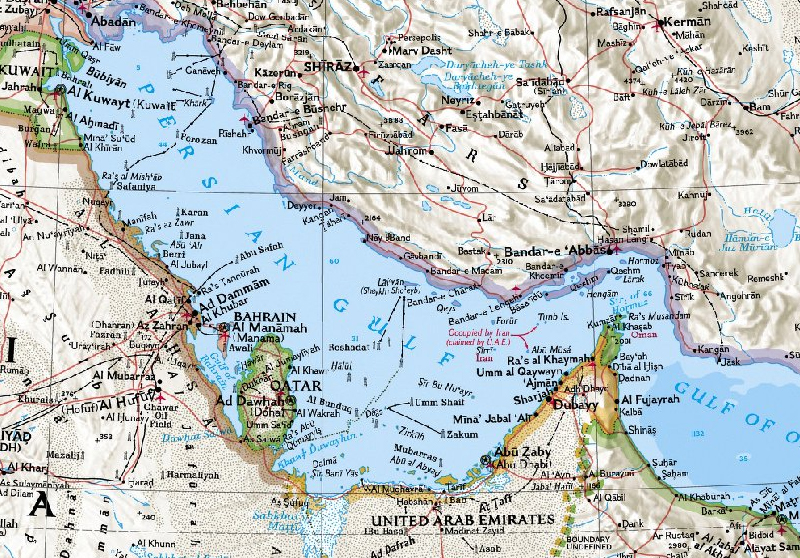
as Ship Runs Aground in Persian Gulf


The flagship of the Coalition, “The Democracy Endeavor,” has run aground in the treacherous Persian Gulf shoals of Iraqi violence. Captains Bush and Blair are racing against time in a desperate attempt to assess the damage and search for a way off the shoals while fending off unrelenting Islamic savages, political pygmies and packs of rabid press dogs. To compound their consternation, much of their precious “freedom and democracy” cargo has been looted and is being buried in Middle Eastern sands. If they are unable to free the ship all their efforts to date will have come to naught.

Since September 11, 2001, George Bush and Tony Blair have led a coalition of the willing on a voyage to find and defeat terror and to deliver freedom and democracy into far flung corners of the world. Against all odds and the sustained efforts of an uncooperative Press and the formerly humanitarian left, the two men have navigated through uncharted waters in their quest to affect a Herculean paradigm shift in the Islamic world. Through the course of their historic voyage, the two men have endured many dangers while enjoying only a few moments of celebration. Their coalition armies routed the enemy and deposed the oppressive tyrant, Saddam Hussein. They rid the world of his psychopathic sons, Uday and Qusay and have endured the asymmetrical attacks of his Baathist minions. They have contended with the al-Qaeda jihadists. They have suffered the deceit of Sunni and Shia alike as American blood and treasure was spilled on the god-forsaken sands of Babylonia. They have endured the Gramscian torture calumnies dispensed by the world’s “humanitarians.” They have patiently explained that theirs is not a crusade against Islam. The Commander-in-Chief was mocked and ridiculed at home and abroad for his “mission accomplished” thank you to the sailors returning home aboard the USS Abraham Lincoln. They have been abandoned on the battlefield by “cut and run,” opportunistic political opponents. They have been poorly served and undermined by their Intelligence agencies and the Department of State. And although they have made mistakes and miscalculations along the way, Bush and Blair have remained steadfast in their mission.

Although the situation is grim and future prospects bleak, the two men insist that "all is not lost" and the final chapters of the saga have not been written. Perhaps eventually, by the most roundabout series of events, the vision of the two leaders will be vindicated, but for now, the political winds have shifted, the peace effort has foundered, the sharks are circling and a storm is gathering on the horizon.